

It is easy, sometimes, to presume that every high performance athlete who is heartbroken not to make a global tournament will be super motivated once their next goal is writ large on a white board. Yet even someone as experienced and driven as Tokyo Olympian Sarah Hawkshaw struggled when the Irish women’s hockey team didn’t make the Paris Olympics.
Losing the last qualifying spot in a 1-2 playoff with Great Britain in January 2024 hit her hard.
“When there’s such an attachment to a goal and it’s linked to something you love so much, when you don’t achieve that, it can be hard to love the game again for a little bit,”
she admits.
“As a group we had invested so much into Paris. We put everything into this centralised system and the idea of leaving no stone unturned, so it was very difficult when we didn’t make it.”

The midfield dynamo was still battling to re-find her joy when the squad finally reconvened in the Sport Ireland Institute for a full debrief and fitness test.
“I was barely able to breathe before that meeting and really struggled to attach any motivation to what was ahead when the conversation opened. I found that very, very hard to sit in.”
Fortunately the Green Army’s highly regarded sports psychologist Mags McCarthy had laid some groundwork with the players.
“Mags was very good at helping me frame my thoughts and then make sense of them because, if you don’t, they can overwhelm you. I think I ended up running one of my best times afterwards because I was so distracted by it,”
she reveals.
Hawkshaw and the Green Army are now in a very different space.
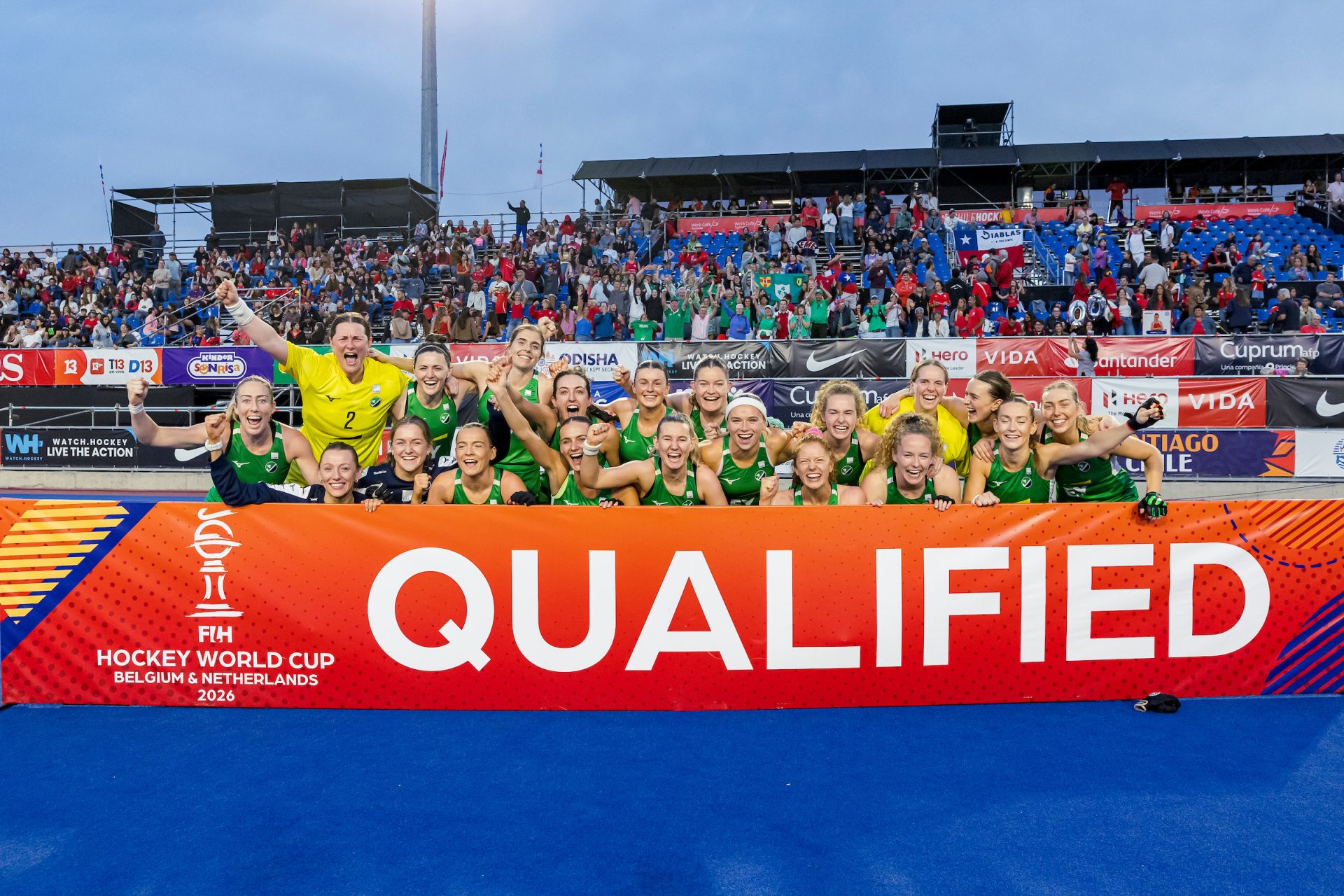
Last month both themselves and the men’s team came through their qualifying tournaments to clinch spots at this year’s World Cup. Yet again the women did it in dramatic fashion, beating Japan in a shootout in Santiago, where Hawkshaw scored the first goal of their 3-1 victory.
Not only have she and the team re-grouped and kicked on, she is now immersed in a very different lifestyle.
The longtime Railway Union stalwart is in her first season playing in Belgium, whose top tier is regarded as one of the top three leagues in the world, behind the Netherland’s vaunted Hoofdklasse. She shares an apartment in Antwerp with Irish teammate Roisín Upton, who benefits from her love of cooking to relax.
Michelle and Niamh Carey, who live in the same block, also play for Braxgata HC, with whom the Dublin twins were runners-up in both the Belgian league and the European Club final (EHL) last year.
It’s not all hockey for the 30-year-old who has a degree in Public Health, a Master’s in Nutrition and Health and a diploma in sports innovation and technology. She is also working (remotely) as Head of Operations for Danu Sports and Medical, an Irish start-up specialising in wearable medical analysis systems.
So why take the leap abroad at this stage of her career?
“It’s a good question,” she says. ‘I looked at it a couple of years prior to the Paris cycle but we had a very centralised programme (in Ireland) then and that was the emphasis. Now there’s quite a good bunch of us playing in Europe.”
That includes Ayeisha McFerran (England), Caoimhe Purdue (Rotterdam), Hannah McLoughlin (Ghent), Ellen Curran, Sarah Torrans and Charlotte Beggs (all in Brussels) and Sarah McAuley (also in Antwerp). A three-month stint playing in Australia’s Hockey 1 league – herself, Upton and Katie Mullan helped Canberra reach the Grand Final – in late 2023 also helped stimulate Hawkshaw’s interest in playing abroad.
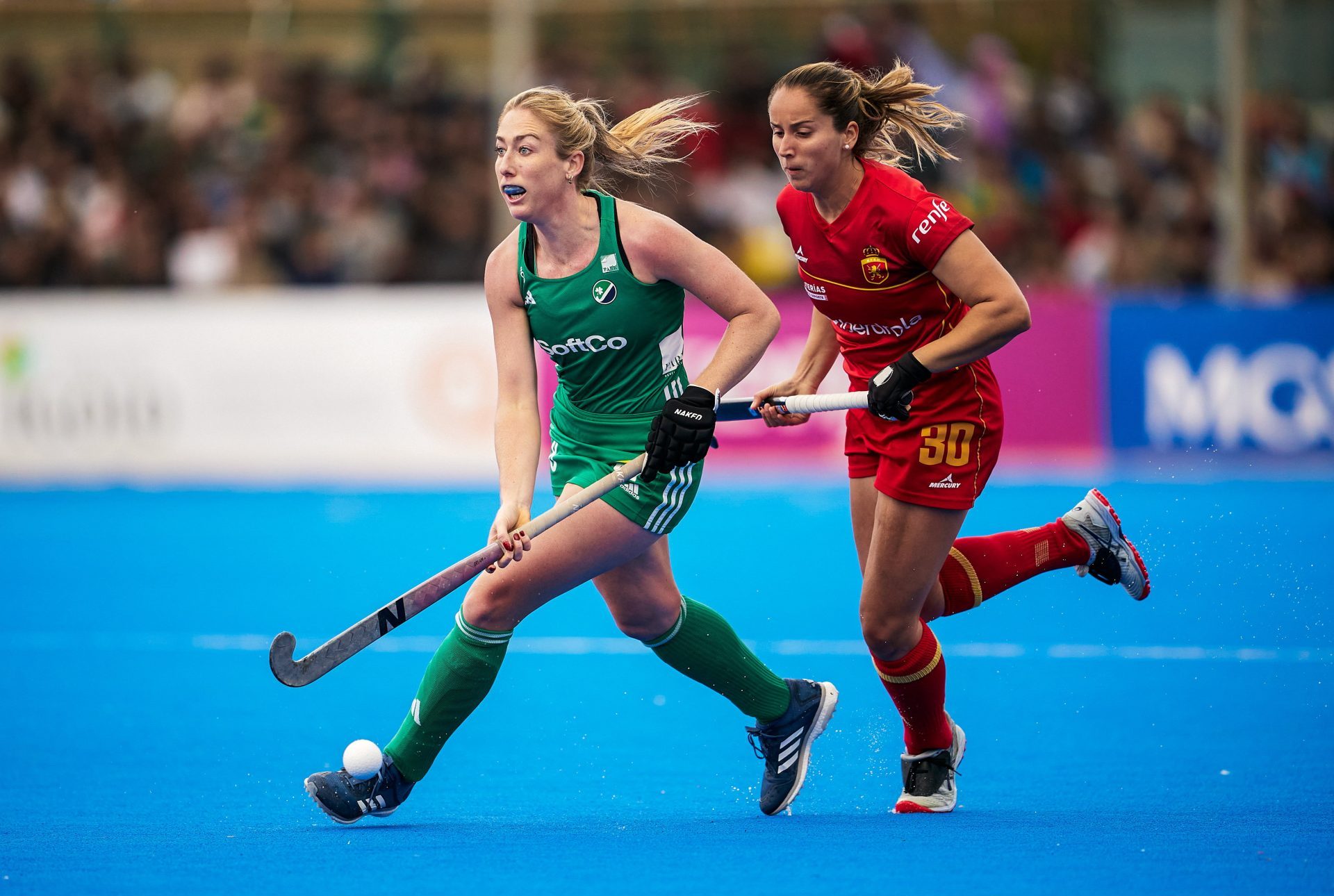
“After the Paris cycle a lot of the younger members of the team went. I wasn’t yet ready for it but now I’ve had the opportunity to live a little more of a hockey lifestyle, I’m enjoying it.
“The connections that you form, and being able to play in different places and different styles always stands to you, and, luckily, my job was really supportive, allowing me to keep professionally progressing while also developing on the pitch as well.”
Gareth Grundie took over as Ireland coach in the Winter of 2024 and handed Hawkshaw the captaincy that had been held, for eight years, by legendary skipper Katie Mullan.
With Mullan still such a pivotal player was there any awkwardness?
“Not at all, because Katie had made the decision herself that she was going to step down and take on a little bit less. Her reason for doing that was to provide her best for the group. She is always thinking of the group.
“We have lots of strong leaders within the squad – Katie, Roisin, Hannah McLoughlin has really stepped up too – so I’m not doing it by myself.
“What I found most challenging was to find my way of doing it (captaincy) and separate myself from it sometimes as well.
“When you get asked, all of a sudden you feel like you have to do things differently. I had to go back and try to understand why I was asked.
“That involved a bit of self-reflection first, then a little bit of work with Mags and the staff and, even speaking at home with my family. They reminded me that I was captain of Leinster at underage level, which I’d barely remembered.”
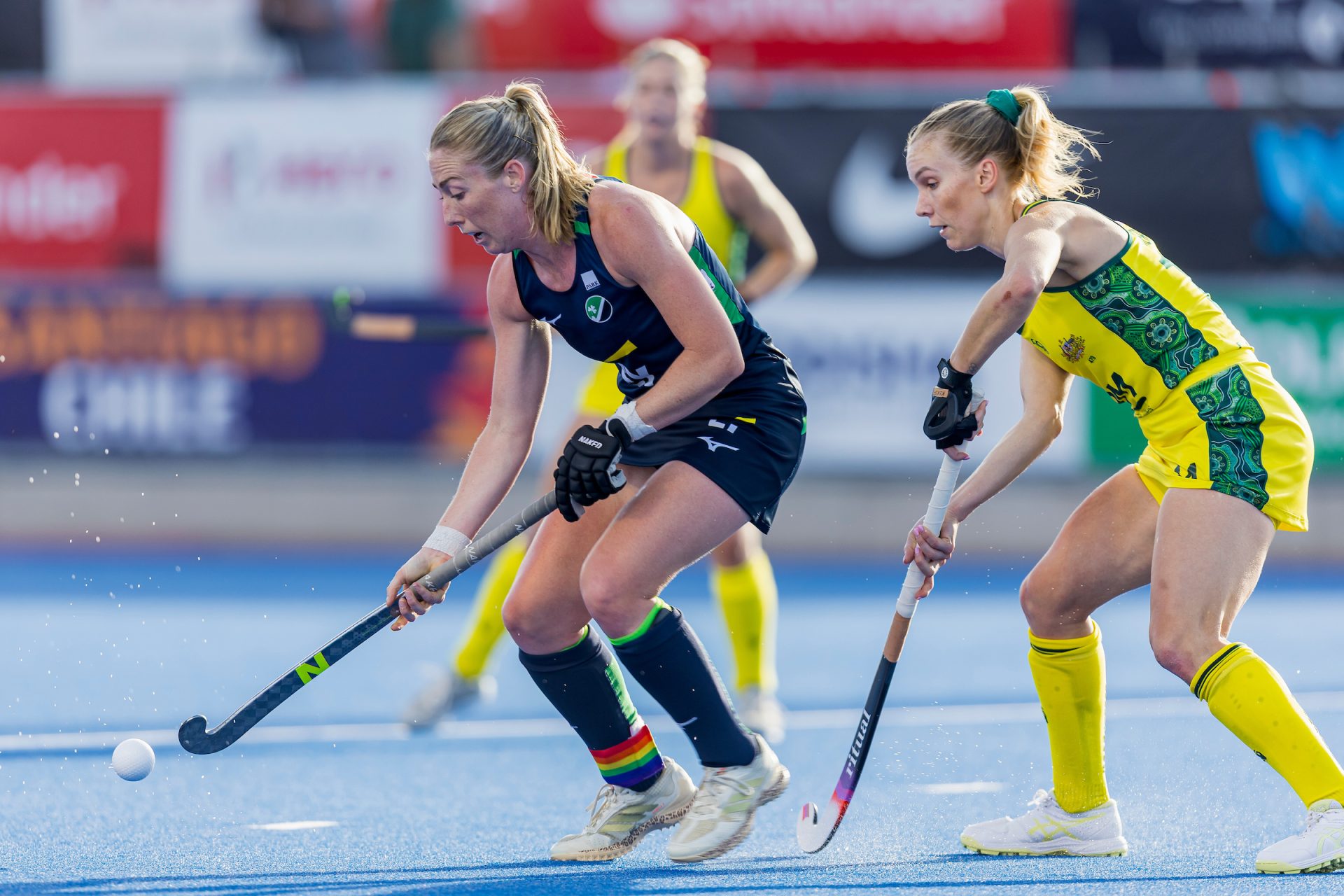
She competed in club athletics and played underage Gaelic football for Dublin before encountering hockey in secondary school (Mount Sackville) so Hawkshaw has admitted to feeling ‘like a bit of an outsider coming into the hockey world,” yet someone clearly identified her leadership capacity very early.
Figuring out what her style is –
“I’m definitely more action orientated than words and I’m very collaborative”
– was her first step.
“Then the biggest learning was trying to find time for me because, at the end of the day I’m still a player. Finding those moments where I set aside time to focus on my own performance is very important. That’s something Katie advised me on, which was a great help.
“The way the international hockey season works is very intensive. We’re away for a few weeks at a-time at tournaments. You have to control your energy and self-regulate. It’s very easy to lose sight of what’s important at times so the questions I ask myself is ‘what is important now? What could make a difference now?’ I don’t always get it right but none of us does.”
By coincidence Ireland are not only based in the Belgian city of Wavre for this Summer’s World Cup, but their Pool C includes the co-hosts as well as Spain and New Zealand.
“I like playing Belgium and I don’t think they like playing us,”
Hawkshaw laughs and they certainly gave them a tough tussle in their 1-2 Pro League debut in Abbotstownlast December.
“We tend to frustrate them and it is a benefit to have so many of us playing here, so having them as the top seeds in our group actually suits us.”
The 2026 FIH World Cup takes place in the Netherlands and Belgium from August 15-20.
Written by Cliona Foley.