


Day Five – Team Ireland at Milano Cortina ‘26
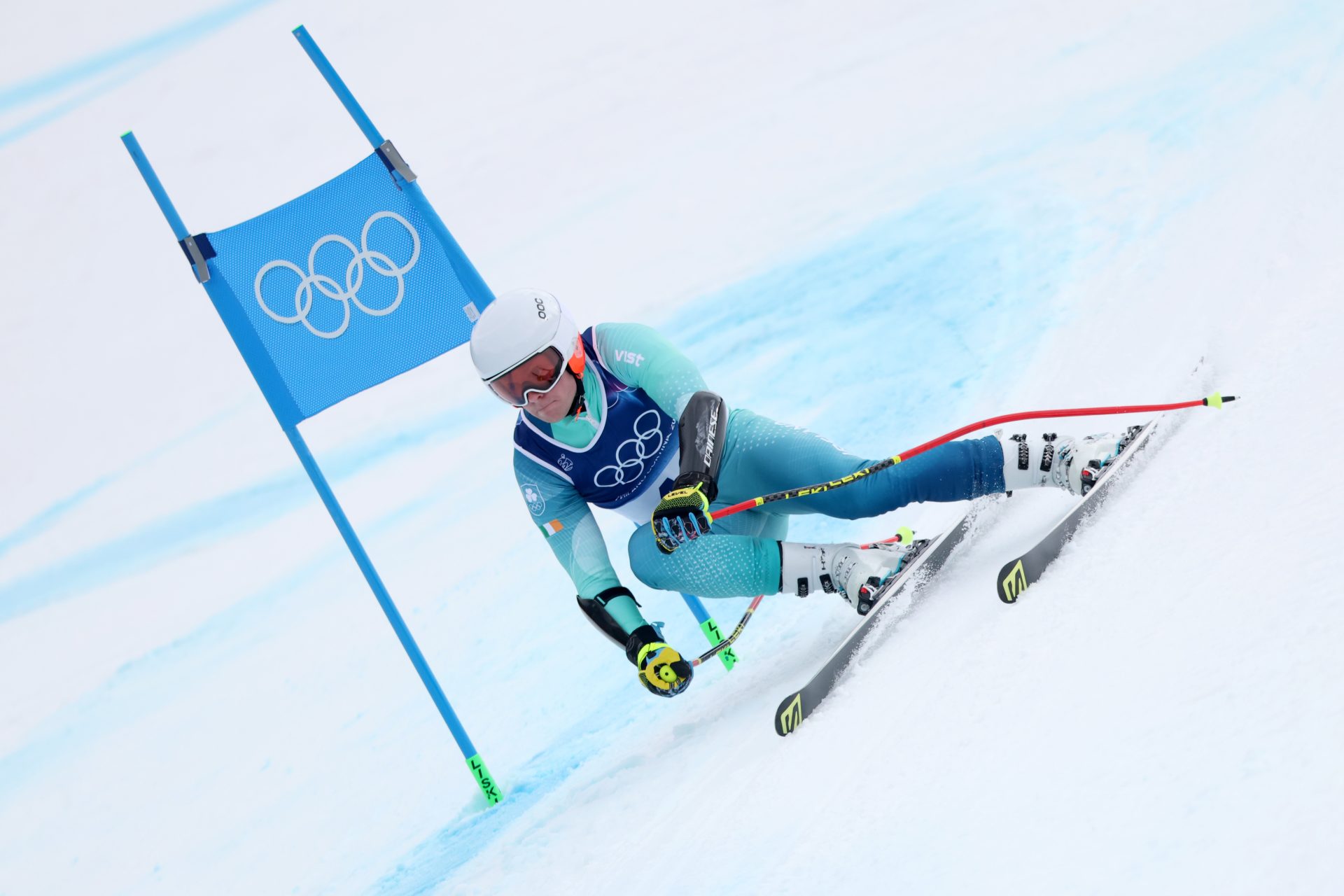
Alpine Skier Cormac Comerford was back in action this morning, competing in the Men’s Super-G speed event in Bormio. The Dubliner held his form on one of the toughest courses in the world to finish 37th with a time of 1:34.58. The event was dominated by Switzerland, who took gold and bronze, with Franjo von Allmen seizing his third Olympic title of the Games. Ryan Cochran-Siegle from the USA won the silver medal, with Swiss skier Marco Odermatt winning bronze.
The Super-G is a high-speed alpine skiing discipline that combines the speed of downhill with the technical carved turns of the giant slalom. Speaking afterwards, 29-year-old Comerford, whose focus events are the more technical disciplines like Slalom and Giant Slalom, later in the week, said,
“There are lots of emotions, lots of new feelings, lots of learning and experience. So, it’s a lot to take in. I’m glad to have shaved a bit of time off my downhill and bring it down in the Super-G.”
Having begun his journey on the slopes of Kilternan, he has gone on to compete on the contrasting iconic slopes of Stelvio. The Glenageary man drew confidence from finishing the downhill last weekend,
“I knew I had the capability, the strength and the power to challenge this slope. So, coming down the downhill and making it down was a really big step for me, and it gave me a lot more confidence going into the Super-G.
Describing his race, he said,
“There were a couple of mistakes on the Super-G so it wasn’t as fast as I would have liked, but it’s all experience for me and learning in the speed events. I was a little tentative on a couple of spots, one or two areas like the Canalino, and then these small little areas and speed – they carry a lot throughout [the run], so you end up losing a lot.
“I really tried to pin it down in the end and keep it as clean as possible. I could feel the speed there; the conditions were definitely changing throughout the race. It was getting a lot more humid, and kind of wet and sticky. I think I managed alright, despite the mistakes and I tried to keep it clean.”
“It was nice to do the speed events, a lot of extra work, but I’m really proud that I had the opportunity, and I pulled myself together and brought it down. There’s a lot of carryover that I can take into the slalom and giant slalom, like the visualisation. The preparation is more intense and precise, and those things all contribute towards every other event.”
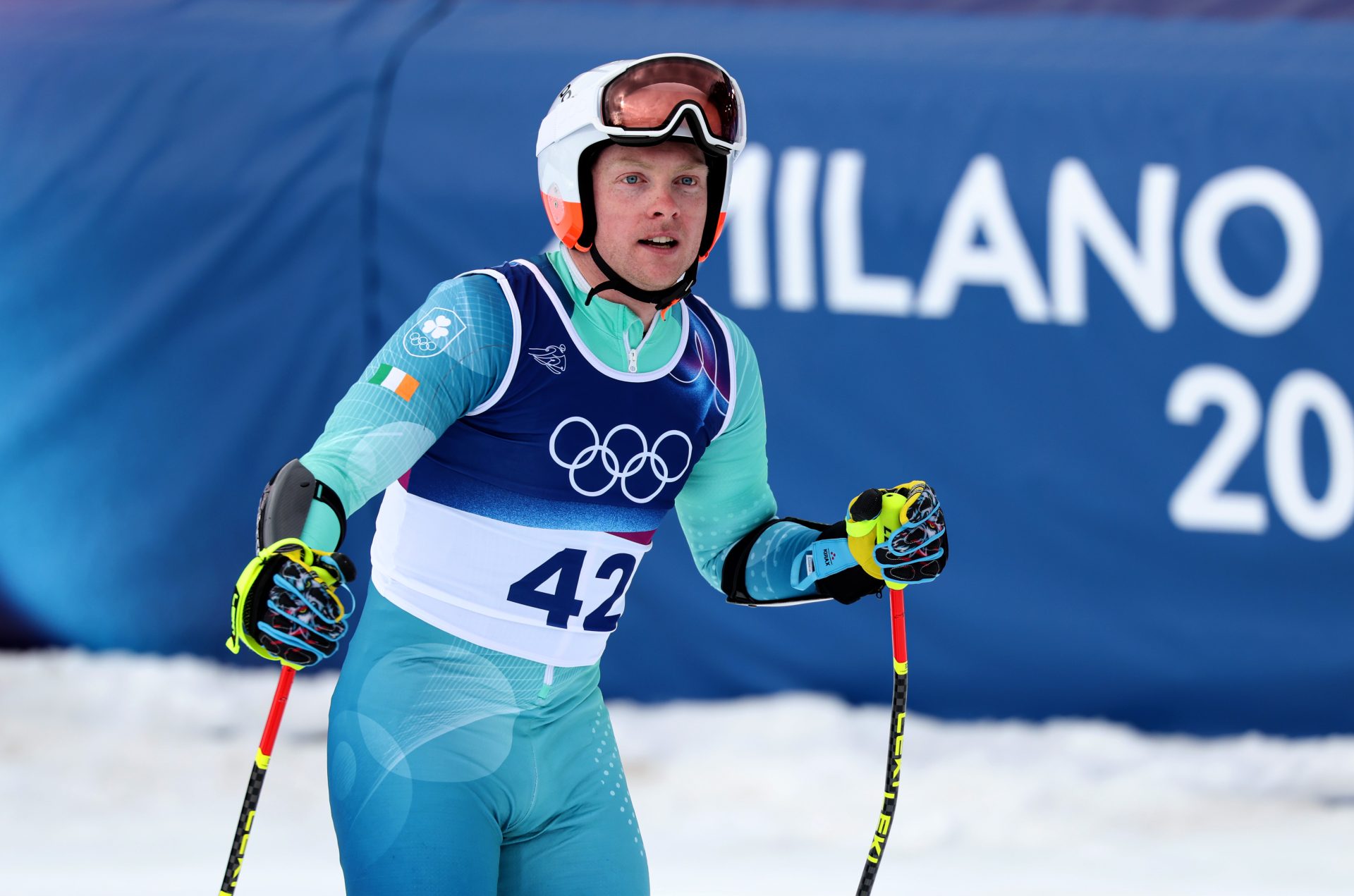
This weekend, Comerford switches his focus to his preferred technical disciplines, competing in the Giant Slalom on Sunday, and he moves into them with a sense of pride and renewed confidence,
“I’m really proud of myself that I was able to do it, prepare for it, and bring it down. It’s a great experience and I’ll bring that forward. The hype around the Stelvio slope is huge – everyone calls it the toughest downhill in the world, and it’s pretty gnarly. At this time of year, it’s fairly mellow so it’s nice to be able to race now with the conditions aren’t quite as gnarly, but the slope is really challenging. I enjoy it. I love a challenge.
“When the going gets tough, that’s when I get going. I love the challenge, and it’s great fun in the end to bring it down.”
The next competition for Team Ireland is on Saturday, 13 February, with Thomas Maloney Westgård competing in the Men’s Cross-Country 10km Free in the Tesero Cross-Country Skiing Stadium.
Please contact heather@olympicsport.ie for interview requests and for moving images of training, which will be available over the coming weeks.
RESULTS – WEDNESDAY 11 FEBRUARY:
Alpine Skiing, Men’s Super-G, Cormac Comerford 37th with a time of 1:34.58
SCHEDULE DAY 8 – SATURDAY 13 FEBRUARY (All times are Irish times – Italy is one hour ahead)
10:45 Cross-Country Skiing, Men’s 10km Free Interval Start, Thomas Maloney Westgård