
IF ANYONE embodies the Olympic Federation of Ireland’s ‘Dare to Believe’ motto it is the country’s top cross-country skier and programme ambassador Thomas Maloney Westgård.
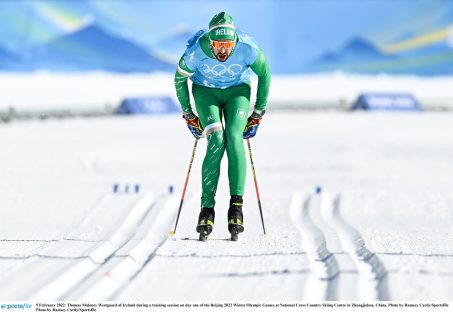
It is 11 years since the 6’ 1” Norwegian-Irish skier first represented Ireland and since then he has shot up through the ranks of the world’s toughest endurance athletes to finish a brilliant 13th at last year’s World Championships.
He has also scored significant top 10 finishes on the World Cup circuit in the last two seasons, including a sixth in Minneapolis in 2023 and two eighth places in Europe last year.
From ranking outside the world’s top 800 Maloney Westgård has made it inside the top 30 in his preferred event, the gruelling 50km freestyle mass start race.
Growing up on a tiny island in Norway with his Irish mum and Norwegian dad he dared to dream of reaching this level, when his peers would no longer see him as some sort of novelty opponent.
“The difference from when I did my first World Cups eight years ago, is unbelievable,”
“Just going into the hotel at races, seeing all the superstars and stuff, it made you feel really tiny, you almost felt out of place.
“When I first started they didn’t know me and if you beat them they were a bit embarrassed. It was like ‘here’s this Maloney guy in the green suit, I must really be having a bad race today’.
“But now it’s like people admire what I do or find it cool that there’s this Norwegian-Irish guy actually up there, competing seriously and getting good results.”
Team Aker Daehlie is a particularly diverse, international group which includes male, female and para-skiers, coached by Hans Christian Stadheim who has a doctorate in sports science.
Maloney Westgård’s teammates include some of Norway’s best second tier as well as skiers from Great Britain, Latvia and Andorra and they have bases in Oslo and Trondheim, where Maloney Westgård now lives.
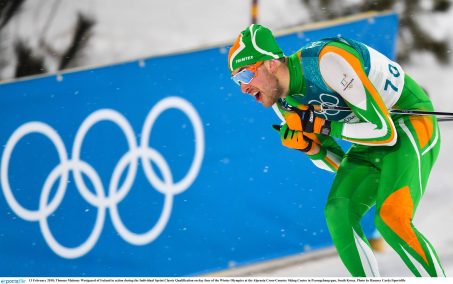
Their motto, appropriately, is ‘beyond’ which they apply to borders, limitations and expectations.
The benefits of joining a pro team are myriad and explain why he has doubled his World Cup points in the last two years.
They do two high altitude training camps a-year, usually in Font Romeu in France, and constantly push their bodies to the limit, using shorter roller-skies to train on roads and large specialist treadmills also when snow is scarce.
They also use enclosed ski tunnels for year-round training on artificial snow, like the one in Torsby, Sweden which is almost 2km long and kept at minus-four degrees.
The appliance of science in training centres, technology and physiology is as much an arms-race in cross-country skiing as it is in elite marathon running and Maloney Westgård is right at the coalface of it.
Finding those marginal gains is a vital part of his continuing progress so he’s delighted to be heading to his third Winter Olympic Games with a grant from the Flogas ‘Make a Difference’ fund which he is using specifically to work on his skis.
His other preoccupation is constantly improving his ‘VO2 max’, the maximum rate of oxygen a body can use during intense exercise.
“I think that is what is stopping me at the moment because I feel like I have the stamina. When others get tired or drop off I can maintain my level but improving my VO2 max, to be able to stay with the incredibly fast starting speed of top races, is where I need to most improve.”
His longest endurance sessions are five to six hours and the further he goes the better he gets.

Maloney Westgård will likely be Ireland’s most experienced athlete at the 2026 Winter Games in Milano-Cortina d’Ampezzo (February 6-22) and it is a leadership role he relishes.
He may have grown up in a country where cross-country skiing is the cultural equivalent of what GAA is in his mother’s native Galway but Ireland’s Winter Olympians, he believes, have a special sauce which helps them to defy the odds.
“My second Games, in Beijing, took place during Covid, so everything was locked down. I know so many athletes from smaller winter sport nations found that hard to cope with because they were isolated before and during it.
“But in Beijing, even though we were a small team, we were a really strong team because we really cared for each other.
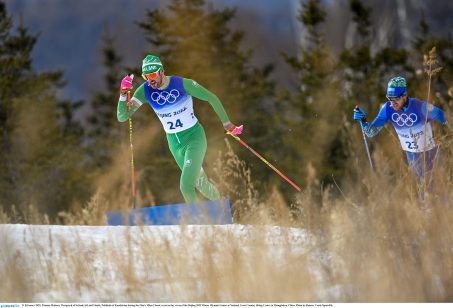
“All my Irish teammates came to my event when I got my Olympic personal best of 14th place (in the 15km event) which, back then, felt so out of my league.
“It was an over-performance given how things had been that season and I really believe their support helped me and sharing that experience with them only tightened our bond.
“Most of us do completely different disciplines. I do cross-country, some of my Irish teammates are alpine skiers or snowboarders or do luge or speed skating and we train separately all over the world.
“They hardly know what I’m doing really but they are so invested in it and were so happy for me when I do well. That is so fantastic.
“I really believe that is one of the advantages of competing for a smaller nation, that we are so tight together as teammates and really root for each other. That is very special and anything I can do at Milano-Cortina in February to strengthen Ireland’s great team spirit I will be proud to do.”