John Lavery
Arts
BIOGRAPHY
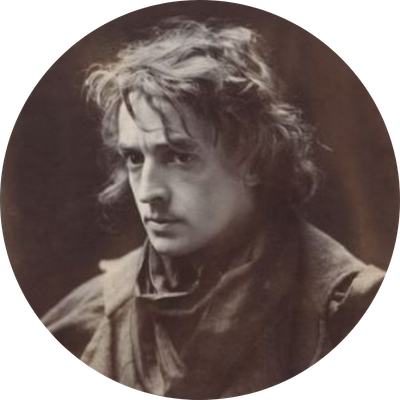
Sir John Lavery was one of the most celebrated painters of his era, a portraitist whose subjects ranged from the leaders of the Irish independence movement to the royal family, and whose second wife Hazel Martyn – herself a painter – provided the image of Kathleen Ni Houlihan that appeared on Irish banknotes from 1928.
Born in Belfast and raised partly in County Antrim before moving to Scotland, Lavery studied at the Académie Julian in Paris in the early 1880s and returned to Glasgow in 1885, where he became associated with the Glasgow School. He was knighted in 1918 and elected to the Royal Academy in 1921. He competed in the arts competition at three consecutive Olympic Games – representing Ireland at Paris 1924 and Great Britain at Amsterdam 1928 and Los Angeles 1932.
His submission at Paris 1924 was Stephen Donoghue in the King’s Colours, a near life-size oil painting of the celebrated champion jockey, also submitted at Amsterdam 1928. During the early 1920s he produced a celebrated series of paintings of horse racing and jockeys, including Weighing Room, Hurst Park (1924).
He and Hazel were involved in the negotiations surrounding the Anglo-Irish Treaty of 1921, hosting talks at their home in London, and Lavery painted key figures on both sides of the conflict. In the 1930s he returned to Ireland and received honorary degrees from both the University of Dublin and the University of Belfast.