Oliver Sheppard
Arts
BIOGRAPHY
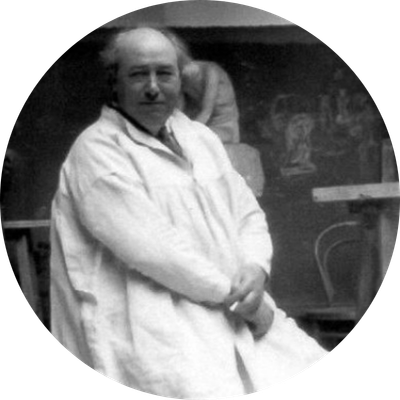
Oliver Sheppard was one of the leading sculptors in Ireland in the first half of the twentieth century, best known for The Death of Cúchulainn – a bronze depicting the mythological hero bound to a stone, mortally wounded but unbowed – which was chosen as the official memorial to the 1916 Rising and unveiled in the General Post Office, Dublin, by Eamon de Valera on 21 April 1935.
He competed in the sculpture section of the arts competition at two Olympic Games – the 1924 Paris Games and the 1928 Amsterdam Games. Born in Cookstown, County Tyrone, the son of a sculptor, Sheppard studied at the Dublin Metropolitan School of Art and under the French sculptor Édouard Lanteri at the Royal College of Art in London, before attending the Académie Julian and Académie Colarossi in Paris.
He taught sculpture at the Dublin Metropolitan School of Art from 1902 to 1937 – later renamed the National College of Art – and was a professor and lifelong member of the Royal Hibernian Academy. His work spanned the Celtic Revival, the independence movement and the years of the Free State: he was commissioned by the Irish government to design the Aonach Tailteann prize medal in 1922 and to create posthumous portrait busts of Patrick Pearse, Kevin O’Higgins and Cathal Brugha.
He was deeply admired by Patrick Pearse, who wrote extensively about his work. He was appointed a governor of the National Gallery of Ireland in 1925. He was a member of Portmarnock Golf Club and regularly partnered his brother Dr John Sheppard on the course. He passed away on 14 September 1941 and is buried at Old St Fintan’s Cemetery, Sutton, Dublin.